
Rotobrush Air Duct Cleaning in Orlando: A Homeowner’s Guide
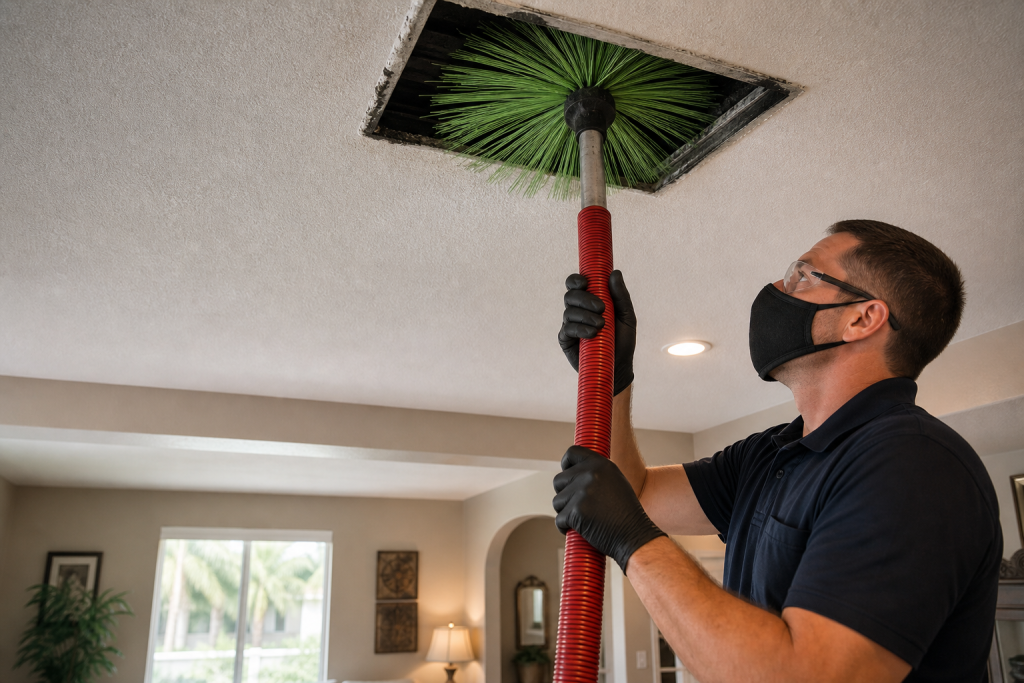
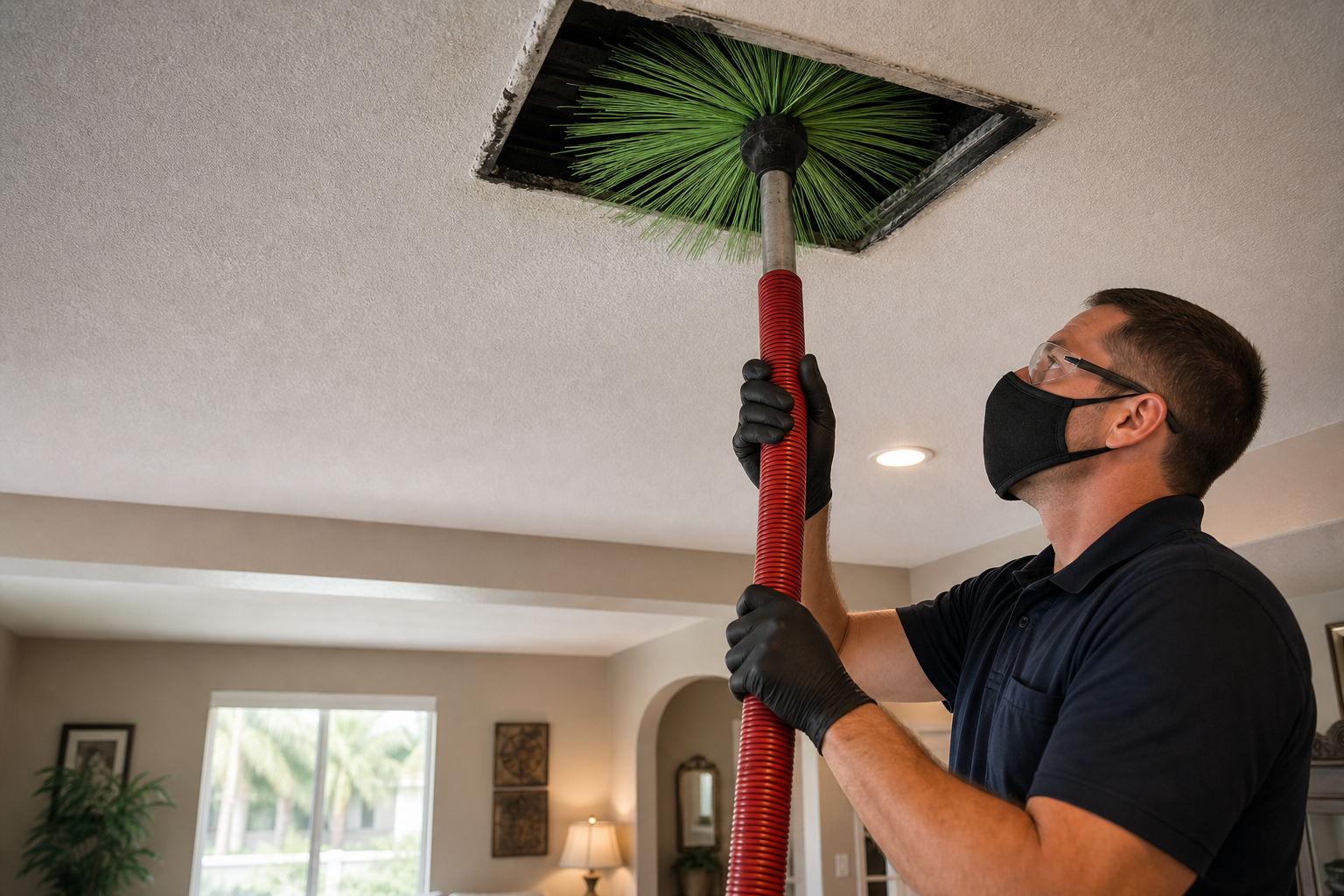
Rotobrush air duct cleaning in Orlando typically costs $300–$600 for a residential system and involves a spinning brush head with integrated vacuum suction designed to dislodge and extract debris simultaneously. The technology works well on flexible ductwork common in Orlando’s suburban housing stock, but its effectiveness depends entirely on whether the operator pairs it with proper negative-pressure extraction and has the experience to avoid damaging delicate connections. If you’d rather have a 20-year specialist evaluate your system, call Titan Air at (877) 417-1643 for a free estimate.
Here’s the uncomfortable truth we’ve learned after two decades in Orlando attics: we’ve seen $15,000 Rotobrush machines turn a simple cleaning into a duct-repair job because the operator treated every system the same. The equipment matters less than the hands holding it.
How Rotobrush Technology Actually Works
Most homeowners picture a spinning brush whipping around inside their ducts like a glorified toilet brush. That’s the misconception competitors bank on.
A genuine Rotobrush system combines two simultaneous actions: mechanical agitation from a rotating brush head and negative-pressure extraction through an integrated vacuum line. The brush loosens debris—dust, pet dander, construction residue, that mysterious black film we find in Orlando homes near construction zones—while the vacuum pulls it out of the system at the same moment. Without both happening together, you’re just relocating debris deeper into your ductwork.
The brush heads vary by duct material:
- Soft-bristle brushes for flexible ductwork (the white or silver flex pipe dominant in Orlando’s 1990s–2010s subdivisions like Hunter’s Creek, MetroWest, and Dr. Phillips)
- Medium-bristle brushes for fiberglass board ducts common in commercial conversions
- Stiffer configurations for older galvanized metal systems found in College Park and Winter Park homes built before 1985
We use Rotobrush equipment alongside our Nikro negative-air machines, not as a standalone solution. In our experience, the integrated vacuum on a Rotobrush unit handles roughly 60–70% of what a dedicated negative-air system extracts. That’s sufficient for maintenance cleaning on newer Orlando homes with light debris loads. For heavier contamination—post-renovation, mold remediation, or homes with years of neglected filtration—you need dedicated extraction power.
Where Rotobrush Excels in Orlando Homes
Orlando’s housing market has a specific duct fingerprint. Drive through any neighborhood built between 1992 and 2008—Baldwin Park, Lake Nona’s earlier phases, Waterford Lakes—and you’ll find flexible ductwork running through hot attics. That flex duct has a corrugated interior surface that traps debris differently than smooth metal.
Rotobrush technology was essentially designed for this application. The flexible cable navigates the gentle curves of flex duct runs, and the brush’s controlled contact pressure cleans those corrugations without the aggressive abrasion that would tear the mylar lining. We’ve cleaned systems in Oviedo and Kissimmee where the original flex duct was still intact after 25 years because previous technicians used appropriate methods.
The technology also works well for:
- Return air trunk lines with moderate debris accumulation
- Individual branch runs in homes with multiple HVAC zones
- Supplemental agitation before main extraction on heavily soiled systems
- Dryer vent transitions where lint has compacted against corrugated surfaces
Where it struggles: older galvanized steel ductwork with significant rust scale, systems with substantial mold growth requiring source removal, and any application where the debris load exceeds the vacuum’s capacity. We’ve been called to homes near downtown Orlando where a coupon-service Rotobrush-only cleaning left the homeowner with dust blowing out of registers for weeks.
The Technician Skill Variable
This is where our 20 years of duct systems becomes relevant, and where most competitors stay silent.
Rotobrush equipment in inexperienced hands damages flex duct. Period. The cable can punch through duct walls at connection points. Over-aggressive brush speed can unravel the internal fiberglass lining. We’ve repaired systems in Pine Hills and Conway where a technician—often someone hired last month—ran the brush at full speed through a 90-degree elbow and tore the duct completely off the collar.
Charles Rodriguez shows up personally on every job because pattern recognition matters. After two decades, you feel when a brush encounters an obstruction versus a damaged duct section. You know to reduce RPMs before transitions. You recognize the difference between compacted debris and a collapsed duct that needs repair, not cleaning.
Here’s what experience teaches that equipment manuals don’t:
- Speed control by duct age: Ductwork over 20 years in Orlando’s attic heat becomes brittle. We run at lower RPMs regardless of what the “standard” setting suggests.
- Directional awareness: Pulling debris toward the vacuum source works better than pushing it deeper, but many operators default to the easier push direction.
- Connection point sensitivity: The 6-inch section where flex meets metal collar is the failure point. We hand-clean these transitions rather than risk mechanical damage.
- Moisture detection: Orlando’s humidity means attics hit 140°F in summer. Condensation in ducts creates mud, not dust. Spinning a brush through wet debris aerosolizes it into your living space. We check first.
The equipment brand is a starting point. The operator’s judgment determines whether you get clean air or a repair bill.
How to Verify a Company Actually Uses Rotobrush Equipment
“Rotobrush” has become generic marketing language, like “Kleenex” for tissues. We’ve seen Orlando-area competitors advertise “Rotobrush cleaning” while using basic rotary whips or compressed-air tools that cost a tenth of the price.
Here’s how to verify what you’re actually getting:
- Ask for the model number: Legitimate Rotobrush units are the Beast series (Beast, Beast Lite, or older 400/450 models). If they can’t name it, they don’t own it.
- Request photos of their actual equipment: Not stock images from the Rotobrush website—photos of their truck, their setup, their worn-in machine. We’ve had homeowners in Windermere ask this; we’re happy to show them.
- Observe the vacuum integration: A genuine Rotobrush has the vacuum hose connected directly to the brush head assembly, not a separate vacuum running nearby. Two separate units means they’re not using integrated extraction.
- Check brush head condition: Worn, flattened bristles indicate heavy use (experienced operator) or neglect (poor maintenance). Either tells you something.
We own and operate Rotobrush, Nikro, and Abatement Technologies equipment because different Orlando homes need different approaches. The Titan Air Duct Cleaning Service Orlando home page lists our full capabilities, but on any given day in Lake Buena Vista or Altamonte Springs, Charles selects equipment based on what your specific system needs—not what marketing says sounds impressive.
What to Observe During Your Service Visit
You don’t need to hover, but informed observation protects you from shortcuts. Here’s what proper Rotobrush execution looks like:
Before starting: The technician should inspect registers, note duct material types, and identify any damaged sections. We photograph pre-existing conditions so there’s no dispute later. In Orlando’s competitive market, this step gets skipped alarmingly often.
During cleaning: You should hear the brush motor vary in pitch as it encounters different debris loads—constant high RPMs suggest the operator isn’t adjusting to conditions. The vacuum should remain running continuously, not intermittently. You should see debris entering the collection container; clear vacuum lines after 30 minutes of “cleaning” indicate poor contact or insufficient suction.
After completion: Request to see the collected debris. We’ve had homeowners in Sanford express shock at what’s removed from systems that “looked fine.” The debris volume and type tells the real story. We also run a post-cleaning camera inspection on request—no charge, because transparency builds the trust that generated our 1,278 reviews.
Related services in Orlando: If your system needs more than brush cleaning, we offer Air Duct Cleaning in Sky Lake and surrounding neighborhoods, plus HVAC Cleaning in Sky Lake for full system restoration.
When to Call a Pro
Rotobrush cleaning is a maintenance tool, not a miracle cure. Call for professional evaluation if you notice:
- Visible mold growth inside registers or duct openings (requires Abatement Technologies-grade remediation, not brushing)
- Musty odors that persist after standard cleaning—often indicates moisture intrusion in Orlando’s humid climate
- Significant debris blowing from registers after previous cleaning (indicates incomplete extraction)
- Ductwork older than 25 years with no prior inspection (may need Dryer Vent Cleaning in Sky Lake or duct repair before cleaning is safe)
We’ve been in Orlando attics where homeowners attempted DIY duct cleaning with rental equipment. One house near Millenia had a homeowner lodge a brush head in a duct run so thoroughly we had to cut access to retrieve it. The “savings” cost him $400 in repairs.
The Bottom Line
Rotobrush technology is legitimate and effective for the right Orlando home with the right operator. It’s not automatically superior to other methods, and it’s actively harmful in the wrong hands. The questions to ask any provider: Do they own the equipment they advertise? Do they adjust technique based on your duct material and age? Does the most experienced person in the company actually perform the work?
At Titan Air, Charles Rodriguez personally evaluates every system before selecting equipment. We’ve accumulated 1,278 reviews at a 4.9-star rating by matching method to need, not forcing every home into the same process. If you’re in Orlando and want an honest assessment of whether Rotobrush cleaning suits your specific duct system, call (877) 417-1643 for a free estimate. No pressure, no coupon gimmicks—just 20 years of pattern recognition applied to your home’s air quality.
Frequently Asked Questions
Rotobrush air duct cleaning in Orlando typically runs $300–$600 for a standard residential system under 2,500 square feet, with larger homes or systems requiring additional access points ranging up to $800. The price varies based on duct material, accessibility, and whether the service includes sanitizing with Abatement Technologies or Aprilaire products. Call (877) 417-1643 for an exact quote—estimates are free.
Rotobrush cleaning is better for flexible ductwork and moderate debris loads, but traditional source-removal methods with dedicated negative-air machines are more effective for heavy contamination, mold remediation, or older metal duct systems. In Orlando’s market, we often combine both approaches rather than treating them as competitors. The “better” method depends on your specific duct construction and contamination level.
Yes, Rotobrush cleaning can damage flex duct connections, tear fiberglass lining, or detach poorly secured joints when operated by inexperienced technicians who don’t adjust speed and pressure for duct age and material. We’ve repaired systems in Orlando where aggressive brush operation created holes that weren’t there before. This risk is why operator tenure matters more than equipment brand.
Ask for the specific model number (Beast, Beast Lite, or 400/450 series), request photos of their actual equipment rather than stock images, and observe whether the vacuum is integrated with the brush head or a separate unit running nearby. Legitimate operators can demonstrate their equipment without hesitation. At Titan Air, we’re transparent about what we use and why we selected it for your specific system.
Written by Charles Rodriguez, Owner & Lead Technician at Titan Air Duct Cleaning Service Orlando, serving Orlando since 2006.
Need Air Duct Cleaning Help?
Call Titan Air Duct Cleaning Service Orlando — licensed & insured, here with fast after-hours help in Orlando.
(877) 417-1643